The morning air carries a different kind of anticipation during Sharatkaal (autumn). There's something magical about the way sunlight filters through the windows, with the beats of dhaak making its way from the nearest Pujo Pandal. This is the season when Maa Durga descends from Kailash with her kids to spend four precious days with her Earthly children, and with her arrival comes a textile tradition that has woven itself into the very fabric of Bengali identity.
Durga Pujo begins with Mahalaya, when the baritone of Birendra Krishna Bhadra fills Bengali households at dawn, recounting the triumph of good over evil through the Chandi Path. The actual celebration spans over five days, from Shashthi to Bijoya Dashami, each with its distinct character and ceremonial requirements. Shashthi marks the official beginning, when Maa Durga's eyes are painted in a ceremony called Chakshu Dan, symbolically bringing the goddess to life. Saptami brings the formal worship and elaborate rituals, while Ashtami—the eighth day—holds special significance as the day when Maa Durga fought her fiercest battle against Mahishasura.
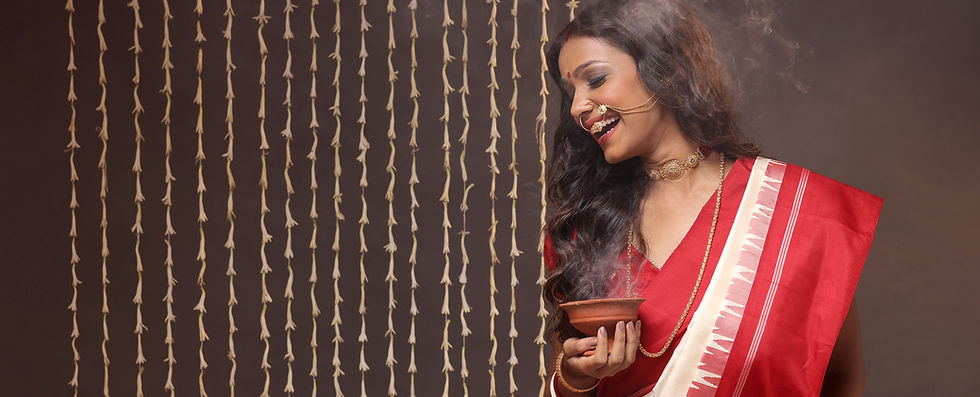
It was traditionally on Ashtami that the laal paar sada sari made its most important appearance. This was when married Bengali women drape themselves in this specific sari for the special prayers and ceremonies of the day (Ashtamir Anjali). The white body represented purity and new beginnings, while the red border symbolized shakti—the divine feminine energy that Maa Durga herself embodied. The combination was considered especially auspicious for invoking the Goddess's blessings for prosperity, protection, and family wellbeing.
Nabami continues the celebration with even greater fervor, while Dashami—also known as Shubho Bijoya—marks the bittersweet farewell to Maa Durga as she returns to her heavenly abode. This day has always been particularly emotional for Bengali families, combining joy for the completed celebration with sorrow at the goddess's departure. The laal paar sada sari played a significant role here too, worn by women as they participated in the sindoor khela—the playful smearing of vermillion that marks the end of the festivities and celebrates the bonds of marriage and sisterhood.
The Exclusive Heritage
In the earlier decades of the twentieth century, the laal paar sada sari was far from being the ubiquitous symbol it has become today. This saree was actually quite exclusive, worn primarily by women from well-established Bengali families who could afford the fine cotton or Gorod Silk that went into creating these garments. The handwoven varieties, particularly those from the famous weaving centers of Bengal like Shantipur and Dhaniakhali, were considered precious possessions that were often passed down from mother to daughter as part of wedding trousseaux.
Many families owned only one or two laal paar sada saris, carefully preserved for the most important occasions of the year. Durga Pujo was obviously the prime time for wearing them, but they might also make appearances during other significant Bengali festivals like Kali Pujo or Lakshmi Pujo.
Some families reserved their finest laal paar sada sari specifically for Bijoya Dashami, considering it the most emotional and meaningful day of the Durga Pujo celebration, when the sari's symbolism of purity and devotion felt most appropriate.
The Great Transformation: When Cinema Met Tradition
The transformation of the laal paar sada sari from an exclusive garment to a Bengali cultural icon began in earnest during the golden age of Bengali cinema in the 1950s and 1960s. Legendary actresses like Suchitra Sen and Uttam Kumar's leading ladies began appearing in these sarees in films that celebrated Bengali culture and traditions. But the films of the time being mostly black-and-white, made it difficult to convey the symbolism of white canvas with red borders through the screens.
Later with the appearance of coloured-pictures, the Bengali film industry began portraying these saris during Durga Pujo scenes, wedding ceremonies, and family gatherings created a visual language that associated the laal paar with Bengali identity itself.
Television further amplified this cultural impact when it arrived in Indian homes during the 1980s. Popular Bollywood movies consistently featured characters wearing laal paar sada saris during festival episodes, reinforcing the association between this particular garment and authentic Bengali celebration. The visual medium made it possible for families across economic strata to see how this saree was draped in Aatpoure style, how it looked in different lighting conditions, and how it moved with the wearer during various activities.
Music videos began featuring dancers and singers in these saris, connecting the garment with contemporary Bengali music and artistic expression. Folk musicians and classical singers alike chose the laal paar sada sari for performances during Durga Pujo, understanding its power to instantly communicate their connection to Bengali heritage and values.
Fashion magazines began dedicating special issues to Durga Pujo styling, invariably featuring the laal paar sada sari as the quintessential choice for the discerning Bengali woman. Styling tips, blouse design suggestions, and jewellery pairing advice became regular features, democratizing the knowledge that had once been passed down only within families. This media attention helped establish standards and expectations around wearing the sari, while also encouraging innovation in how it could be styled for modern sensibilities. The style has become so iconic that it's impossible to imagine authentic Durga Pujo celebrations without the sea of white cotton/silk bordered in red.
Contemporary Celebrations
Social media has added another dimension to the laal paar sada sari's cultural significance. During Durga Pujo season, platforms like Facebook and Instagram are flooded with photographs of women in these sarees, creating a virtual community of celebration that spans geographical boundaries. Bengali women living in New York, London, or Sydney share photos of themselves in laal paar sada saris, maintaining their connection to cultural traditions despite physical distance from Bengal.
The hashtag culture has given new life to traditional celebrations, with tags like #LaalPaarSada and #DurgaPujoLook trending during festival seasons. These online conversations have created new spaces for discussing styling tips, sharing family stories about inherited sarees, and connecting with others who share similar cultural backgrounds. Young Bengali women living abroad often seek advice online about where to buy authentic laal paar sada saris, how to drape them properly, and what accessories to choose.
Through the medium of cinema, television, and digital culture, this simple combination of white base and red border has woven itself beautifully into the collective consciousness of Bengali identity.



Comments